 Business License

QCM/EQCM Technologies Powering Li-Ion Battery Interface Research
Applications of Cu, Ni and Zn-Coated Quartz Crystal Microbalance Chips and 2026 Advances
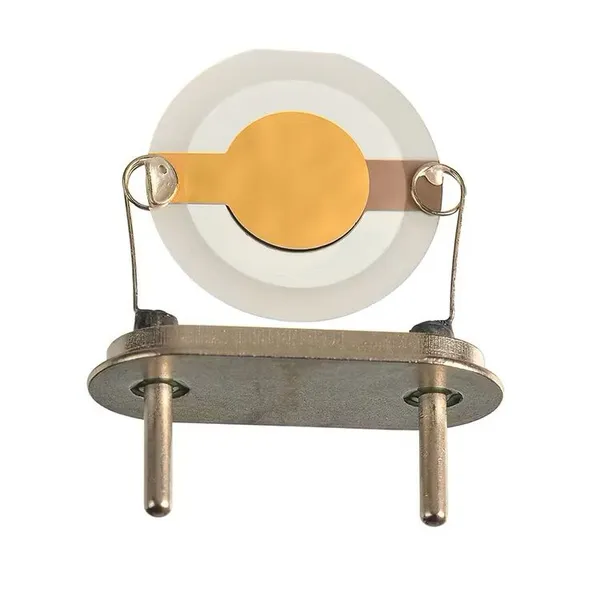
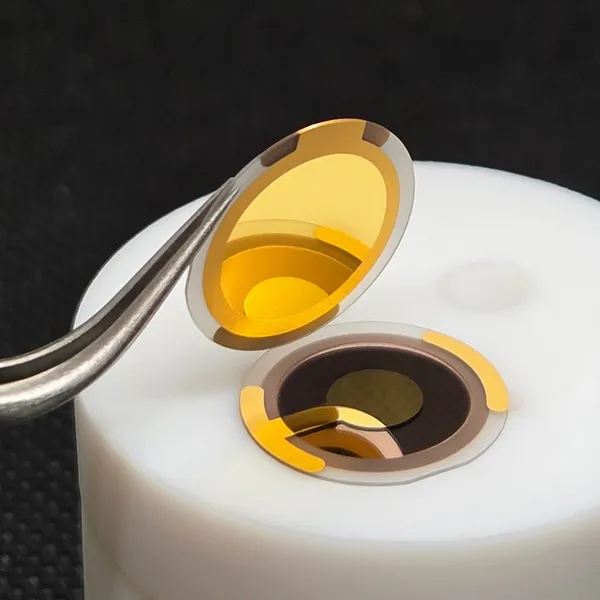
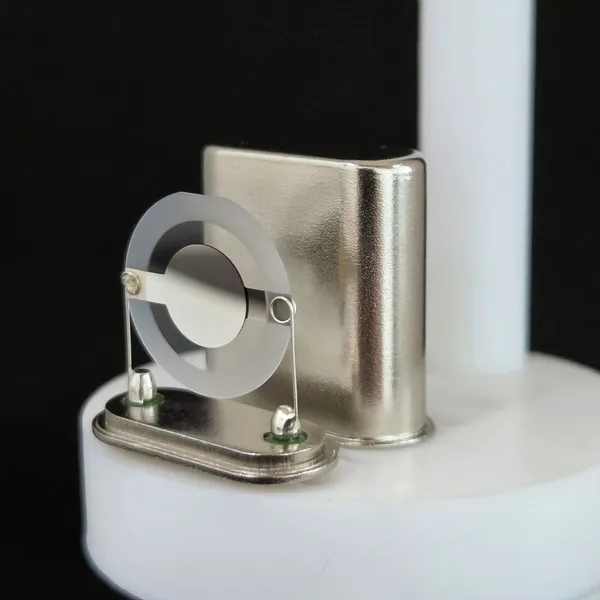
The quartz crystal microbalance (QCM) and its electrochemical coupling (EQCM) can weigh nanogram-level mass changes on an electrode surface in real time and quantitatively, and have become core in-situ characterization tools for lithium-ion battery interface research. In 2026, EQCM applications in Li-ion, aqueous zinc and multivalent metal batteries continued to surge. A number of EQCM studies published in high-impact journals such as the Journal of the American Chemical Society (JACS) and Advanced Science (Adv. Sci.) (1, 2) have brought Cu-, Zn- and Ni-coated QCM chips to the forefront of battery R&D. This article reviews the principles of EQCM, typical applications of Cu/Ni/Zn-coated chips in Li-ion battery interface research, and representative 2026 advances, providing battery researchers with a technical reference and chip selection guide.
1. Introduction: Interfaces Decide Battery Performance
The performance ceiling of Li-ion batteries is largely determined by electrode/electrolyte interfaces. The solid electrolyte interphase (SEI) that continuously grows on Li metal anodes, the nucleation and deposition morphology of Li on Cu current collectors in anode-free cells, and the deposition/dissolution, hydrogen evolution and passivation of Zn in aqueous zinc batteries — these nanoscale interfacial processes directly determine Coulombic efficiency, cycle life and safety.
Conventional electrochemical methods (cyclic voltammetry, electrochemical impedance spectroscopy, charge/discharge curves) usually infer interfacial behavior only indirectly and cannot quantitatively "see" mass gain or loss on the electrode in real time. The quartz crystal microbalance (QCM) was created to solve this problem: by exploiting the piezoelectric effect of AT-cut quartz crystals, it converts mass changes on the electrode surface into resonance frequency shifts in real time, with nanogram-level sensitivity (ng/cm²). When coupled with a potentiostat (i.e., EQCM), it weighs tiny mass changes during deposition/dissolution, film formation, and adsorption/desorption while voltage/current stimuli are applied, providing unique quantitative evidence for interfacial mechanism studies.
2. Principles of QCM/EQCM
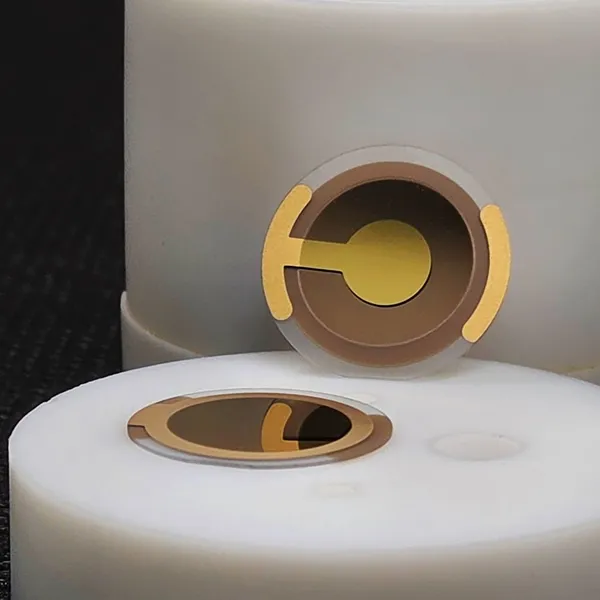
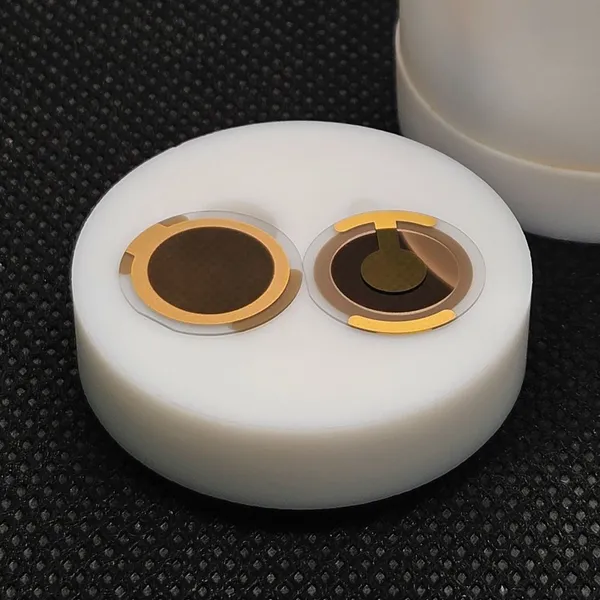
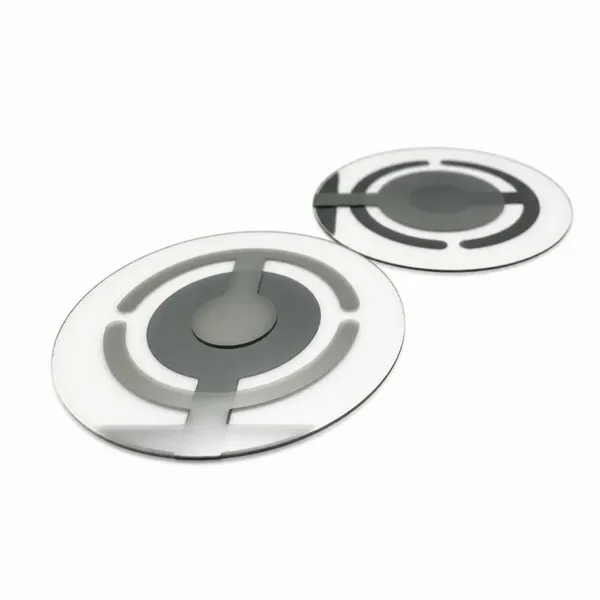
The heart of a QCM is an AT-cut quartz wafer with metal electrodes (Au, Cu, Ni, Zn, etc.) deposited on both faces. When mass changes on the electrode surface (metal deposition, SEI formation, ion intercalation, etc.), the resonance frequency shifts accordingly. Under the rigid thin-film approximation, the frequency shift and mass change obey the Sauerbrey equation:
Δf = −2·f₀²·Δm / (A·√(ρq·μq))
where f₀ is the fundamental frequency, A the effective electrode area, and ρq, μq the density and shear modulus of quartz. A frequency decrease indicates a mass increase, with typical sensitivity at the nanogram level (12).
Furthermore, by measuring the dissipation factor (ΔD), EQCM distinguishes rigid deposits from viscoelastic films: dense, rigid deposits show low dissipation, whereas loose, viscoelastic SEI/passivation films show high dissipation. EQCM-D (with dissipation monitoring) and multi-harmonic analysis simultaneously resolve "mass + viscoelasticity + morphology" information. Correlating mass change with charge (mass-per-electron, MPE) further identifies reaction pathways and intermediates (e.g., the two-step Zn²⁺ → Zn⁺ reduction).
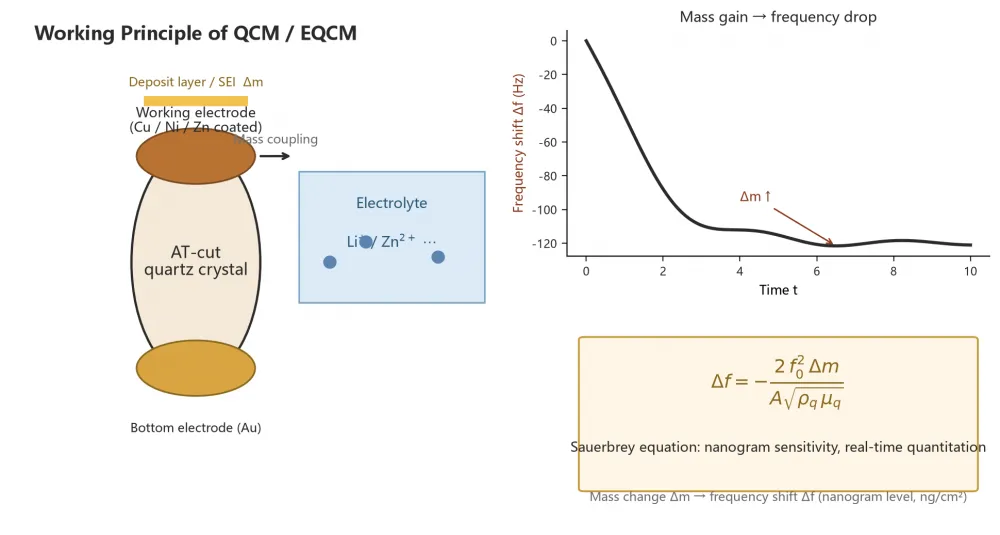
Fig. 1 Working principle of QCM/EQCM (left: AT-cut quartz crystal and electrode configuration; right: mass-frequency response and the Sauerbrey equation)
3. Cu-Coated QCM Chips: Li Deposition and Anode-Free Battery Interfaces
The Cu current collector is the only carrier of lithium in Li metal and anode-free batteries. Li nucleation, deposition morphology and SEI formation on it directly determine Coulombic efficiency and cycle life. Cu-coated QCM chips allow in-situ study of these processes on the real current-collector material:
• Li plating/stripping on Cu: the frequency (mass) response quantifies deposited and stripped Li in real time, evaluating Coulombic efficiency and "dead Li" losses;
• In-situ Cu–SEI characterization: EQCM-D resolves SEI viscoelasticity, judging whether the film is dense or loose;
• Rapid electrolyte/additive screening: interfacial behavior of different electrolytes on Cu chips can be compared quantitatively and quickly.
Representative works in 2025–2026 include:
• JACS (2026): the Stanford teams of Zhenan Bao and Yi Cui proposed "field-responsive dynamic monolayers" — electric-field-responsive molecules self-assemble into dense, ordered dynamic monolayers on the Li anode — and used EQCM-D to verify the field responsiveness and packing in situ. This strategy promotes inorganic-rich SEI and chunky Li growth, markedly improving Coulombic efficiency, reducing overpotential and enhancing long-term cycling in Li‖Cu, Li‖Li, 20 μm ultrathin Li and anode-free NMC811 configurations (1);
• ChemElectroChem (2025): Genov, Bund, Ivanov and co-workers used a localized high-concentration sulfolane electrolyte and two in-situ electrochemical pretreatments to pre-form the initial SEI on Cu current collectors, characterizing Cu–SEI viscoelasticity with damping-monitoring EQCM and showing that a homogeneous, low-roughness, inorganic-organic balanced Cu–SEI benefits anode-free battery performance (10);
• Batteries (2025): Stich, Bund and co-workers combined EQCM-D with EIS to compare SEI formation on Cu vs. amorphous carbon, finding substantially thicker SEI on carbon and clarifying the effects of formation parameters and the vinylene carbonate (VC) additive (11);
• Adv. Energy Mater. (2026): Bao, Meng and co-workers used anode-free cells as a model system, combining structural, chemical and electrochemical analyses to quantitatively track the Li inventory, clarifying Li migration and loss pathways across cycling stages and providing a quantitative framework for anode-free cell design (this work does not employ EQCM; it is a complementary approach for quantitative interface research) (4).
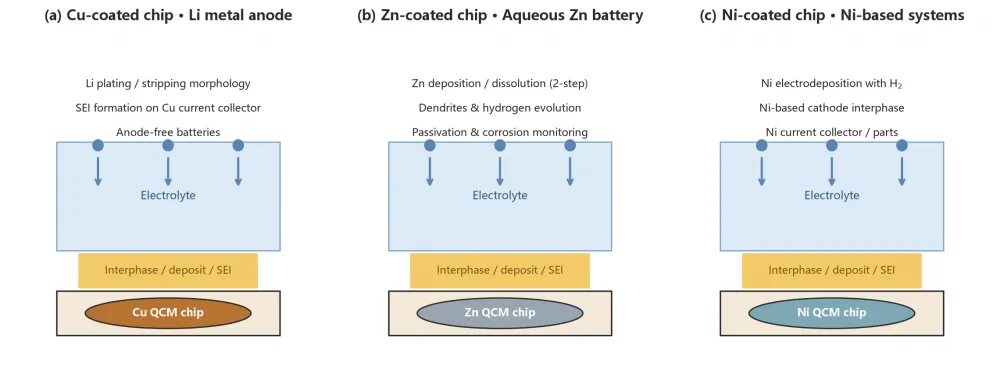
Fig. 2 Typical application scenarios of Cu-, Zn- and Ni-coated QCM chips
4. Zn-Coated QCM Chips: An Interface Probe for Aqueous Zinc Batteries
Aqueous zinc-ion batteries attract great attention for their high safety, low cost and abundant resources, but dendrite growth, hydrogen evolution, corrosion and passivation of the Zn metal anode severely limit their lifetime. Zn offers a high theoretical capacity of 820 mAh/g, and its deposition/dissolution may proceed via a two-step mechanism through a Zn⁺ intermediate — complex interfacial processes ideally suited to quantitative EQCM study:
• Deposition/dissolution reversibility: EQCM mass efficiency (ME) and Coulombic efficiency (CE) directly quantify side-product deposition and active Zn loss. For example, the average ME in ZnSO₄ electrolyte is only 48.3%, rising to 98.5% with g-C₃N₄ nanosheets, with CE reaching 99.6% (2);
• Reaction-path analysis: mass-per-electron (MPE) analysis resolves the two-step Zn²⁺ → Zn⁺ → Zn reduction (theoretical ≈ −32.7 g/mol; intermediate ≈ −65.4 g/mol);
• Corrosion and passivation monitoring: the real-time corrosion rate is derived from the linear frequency change with time at open-circuit potential; potential-dependent passivation-film formation/removal is observed in sulfate electrolytes.
Representative works in 2026 include:
• Adv. Sci. (2026): a review systematically summarizes EQCM and its derivative techniques (EQCM-D, AC-EQCM) in energy-storage interface research — e.g., a Zn(OTf)₂ electrolyte containing 1 wt% PS additive maintains a mass efficiency stably above 99.8%, significantly outperforming additive-free 1 M Zn(OTf)₂ (2);
• Adv. Funct. Mater. (2026): a "molecular integration" strategy designs a diazolidinyl urea (DU)-based additive that reconstructs the Zn²⁺ solvation environment and improves Zn-anode interfacial stability, suppressing dendrites and side reactions (6);
• Adv. Energy Mater. (2026): spatial electrochemical heterogeneity and additive-mediated regulation are revealed in scale-up aqueous zinc pouch-type cells (9);
• Adv. Energy Mater. (2026): a magnetic-field-assisted chemical displacement strategy builds a uniform, compact Cu protective layer (ZnCu-MF) on Zn, regulating Cu dissolution-redeposition kinetics and promoting Zn–Cu co-deposition — symmetric cells cycle for over 5000 h and half-cells deliver an average Coulombic efficiency of 99.8% (non-EQCM) (8).
5. Ni-Coated QCM Chips: Ni-Based Electrodes and Electrodeposition
Ni-based systems play an important role in alkaline batteries, Ni-MH/Ni-Cd alternatives and certain cathode materials. Ni electrodeposition is often accompanied by hydrogen evolution; Ni-coated QCM chips can resolve the charge/mass contributions of Ni deposition vs. hydrogen evolution in real time:
• Initial nucleation and hydrogen evolution: EQCM separates the charge allocated to Ni deposition and hydrogen reduction — nickel hydride forms in the presence of boric acid, whereas nickel hydroxide forms without boric acid due to rising interfacial pH;
• Ni-based cathode interphases: interface degradation and Ni dissolution-re-deposition of Ni-rich cathodes (NCA/NMC, etc.) can be quantitatively tracked with EQCM;
• Ni current collectors/parts: controlled study of electrodeposition mass and morphology of Ni on current collectors or 3-D structures.
6. Extended EQCM Applications: SEI Kinetics, Li-S/Li-O₂ and Multivalent Metals
Beyond Cu/Ni/Zn systems, EQCM demonstrated value across more battery interfaces in 2026 (see the Adv. Sci. 2026 review):
• SEI formation kinetics: in-situ tracking of continuous SEI mass gain and viscoelastic evolution evaluates film quality for different electrolytes and additives;
• Li-S/Li-O₂ batteries: Li₂O₂ dissolution proceeds via "surface dissolution" (≈3.2 ng/cm²/min) or "bulk fragmentation" (≈300 ng/cm²/min), with the solvent determining the pathway; in Li–CO₂ batteries, the LiI redox mediator makes Li₂CO₃ decomposition/deposition highly reversible (MPE ≈ 40 g/mol) (2);
• Multivalent metals (Mg, etc.): EQCM-D distinguishes stable electrolytes (Mg[B(HFIP)₄]₂, highly reversible deposition) from unstable ones (Mg(TFSI)₂ forming a loose passivation film with low CE), and verifies that Cl⁻ additives promote the formation of a thin, dense passivation film (2).
7. 2026 Highlights at a Glance
Table 1 High-impact battery-interface research advances in 2026
Journal / Year | Topic | Method & QCM/EQCM role |
JACS 2026 | Field-responsive dynamic monolayers regulating the Li-anode interface | EQCM-D verifies monolayer field response and packing in situ |
Adv. Sci. 2026 | Review of EQCM and derivative techniques in energy-storage interfaces | Systematic summary of EQCM-D / AC-EQCM applications |
J. Mater. Chem. A 2026 | Solid-state prealkylation (SPEAR) tuning SEI composition | Solid-state NMR/XPS resolve SEI; symmetric-cell EIS (non-QCM) |
Adv. Energy Mater. 2026 | Quantitative Li-inventory framework for anode-free cells | Combined structural/chemical/electrochemical Li tracking (non-EQCM) |
Batteries Supercaps 2026 | Sustainable sulfolane electrolyte anode-free batteries | Cu current-collector engineering & performance–structure correlation (non-EQCM) |
Adv. Funct. Mater. 2026 | Molecular-integration additive stabilizing Zn anodes | DU-additive electrolyte engineering & (101)-oriented Zn deposition (non-EQCM) |
Adv. Energy Mater. 2026 | Heterogeneity in scale-up Zn pouch cells | Spatially resolved analysis with operando Raman/thermal imaging (non-EQCM) |
Note: the JACS and Adv. Sci. entries directly employ or systematically review QCM/EQCM; the others are representative 2026 background works in battery-interface research (no QCM used).
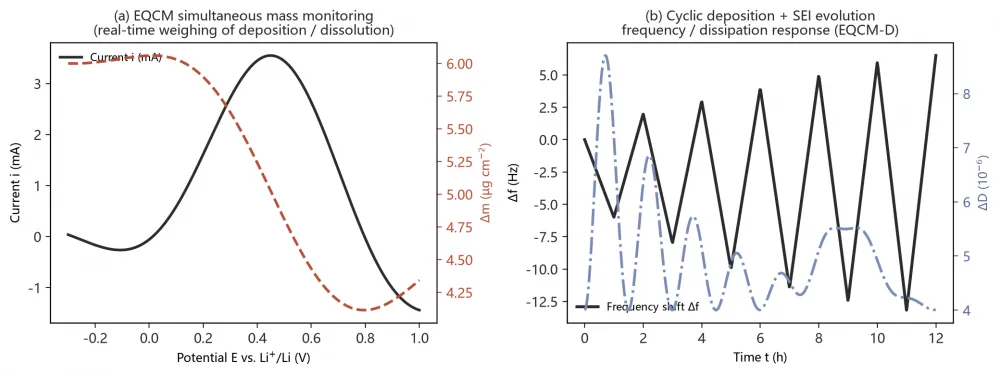
Fig. 3 Typical in-situ EQCM responses (a: simultaneous current-mass monitoring during deposition/dissolution; b: frequency/dissipation response during cyclic deposition and SEI evolution)
8. QCM Chip Selection Guide
Selecting the appropriate coating, fundamental frequency and crystal size for the research system is the prerequisite for reliable interface data:
Table 2 QCM chip selection guide
Chip coating | Target systems | Typical applications | Selection notes |
Copper Cu | Li metal / anode-free cells | Li‖Cu, Cu–SEI formation, Li deposition morphology | Close to real current collector; watch SEI viscoelasticity |
Zinc Zn | Aqueous zinc-ion batteries | Zn plating/stripping, dendrites, HER, passivation | Quantify ME and CE |
Nickel Ni | Ni-based electrodes / electrodeposition | Ni deposition, Ni-rich cathode interphases | Separate HER contribution; boric-acid effect |
Gold Au | General working electrode | Standard EQCM tests, inert control | High chemical inertness, universal |
Silver Ag | Common coating | General electrochemical studies | Mind chemical stability |
Regarding frequency, 5 MHz and 10 MHz AT-cut wafers are the common laboratory specifications: the higher the fundamental frequency, the higher the Sauerbrey sensitivity, but the more sensitive to viscoelastic loading. The thickness and uniformity of the coating directly affect frequency stability and signal noise; it is recommended to use wafers with uniform coating and good adhesion, and to complete fundamental-frequency calibration before experiments.
9. Conclusions and Outlook
EQCM has evolved from a mere "weighing tool" into a core in-situ platform for battery interface science. Cu-, Zn- and Ni-coated QCM chips respectively cover the Li metal/anode-free interface, the aqueous zinc battery interface and Ni-based electrochemical systems, forming a "trinity" for Li-ion battery interface research. Multiple top-journal works in 2026 have verified its irreplaceable quantitative value. Looking ahead, coupling EQCM with synchrotron radiation, in-situ mass spectrometry and optical microscopy, together with AI-assisted frequency-response data analysis, will further unleash its potential in battery mechanism research and accelerate the iteration of high-performance batteries.
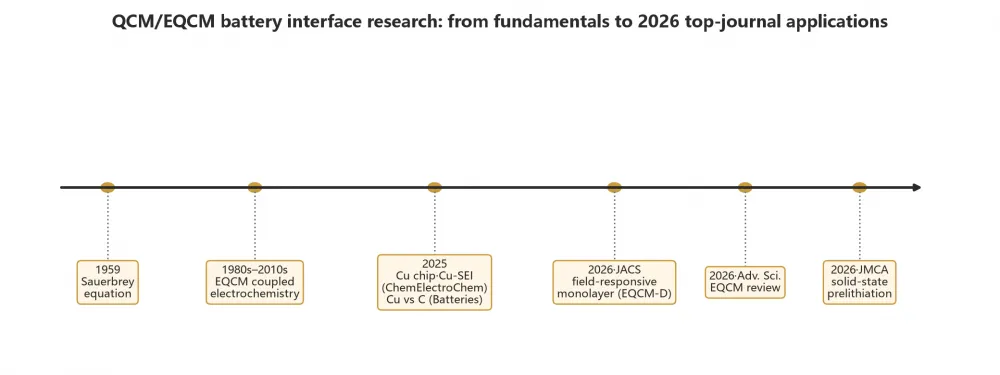
Fig. 4 Development of QCM/EQCM battery-interface research and 2026 top-journal applications
References
1. Zhang E., Holoubek J., Lyu H., et al.; Cui Y.; Bao Z. Field-Responsive Dynamic Monolayer Regulated Interphase for Enhanced Lithium Metal Batteries. J. Am. Chem. Soc., 2026. DOI: 10.1021/jacs.5c19365
2. Wang Z., Cheng S., Feng G. Real-Time Investigation of Interfacial Evolution in Electrochemical Energy Storage Systems via EQCM. Advanced Science, 2026. DOI: 10.1002/advs.76503
3. Musgrove A.L., Verma A., et al.; Veith G.M. Solid-state prealkylation of electrode architectures to tune solid electrolyte interphase composition. J. Mater. Chem. A, 2026. DOI: 10.1039/d6ya00065g
4. Bao W., et al.; Meng Y.S. A Quantitative Lithium Inventory Framework for Anode-Free Lithium Metal Batteries. Adv. Energy Mater., 2026. DOI: 10.1002/aenm.71028
5. Witt M., Genov I., et al.; Ivanov S. Anode-Free Li-Metal Battery Based on Sustainable Sulfolane Electrolyte. Batteries Supercaps, 2026. DOI: 10.1002/batt.202500943
6. Feng W., Zhang R., Zhao X., et al. Molecular Integration of a Fused Building-Block Architecture for Ultra-Stable Aqueous Zinc-Ion Batteries. Adv. Funct. Mater., 2026. DOI: 10.1002/adfm.77394
7. Joraleechanchai N., Matkhaw N., et al.; Sawangphruk M. Solvation-driven interphase engineering and mechanical failure pathways in large-scale anode-free lithium metal batteries. Chem. Sci., 2026. DOI: 10.1039/d6sc00025h
8. Zhang Y., Jia Y., et al.; Fang G.; Jiang Y. Magnetic Field-Tailored Copper Layers With Fast Dissolution-Redeposition Kinetics for Stable Zinc Metal Anodes. Adv. Energy Mater., 2026. DOI: 10.1002/aenm.71376
9. Thieu N.A., Li W., et al.; Liu X. Unraveling Spatial Electrochemical Heterogeneity and Additive-Mediated Regulation in Scale-up Aqueous Zinc-Ion Pouch-Type Cells. Adv. Energy Mater., 2026. DOI: 10.1002/aenm.71532
10. Genov I., Kurniawan M., et al.; Bund A.; Ivanov S. Performance Improvement of Anode-Free Lithium-Metal Batteries by In Situ Design of the Initial SEI Using Localized High-Concentration Sulfolane Electrolyte. ChemElectroChem, 2025. DOI: 10.1002/celc.202500102
11. Stich M., Leppin C., et al.; Bund A. Comparing the SEI Formation on Copper and Amorphous Carbon: A Study with Combined Operando Methods. Batteries, 2025, 11(7): 273. DOI: 10.3390/batteries11070273
12. Sauerbrey G. Verwendung von Schwingquarzen zur Wägung dünner Schichten und zur Mikrowägung. Zeitschrift für Physik, 1959, 155(2): 206–222.
Recently Posted
-
QCM922 Quartz Crystal Microbalance
March 18, 2026General Princeton Applied Research is proud to offer the QCM922 Quartz Crystal Microbalance. The QCM922, an instrument develo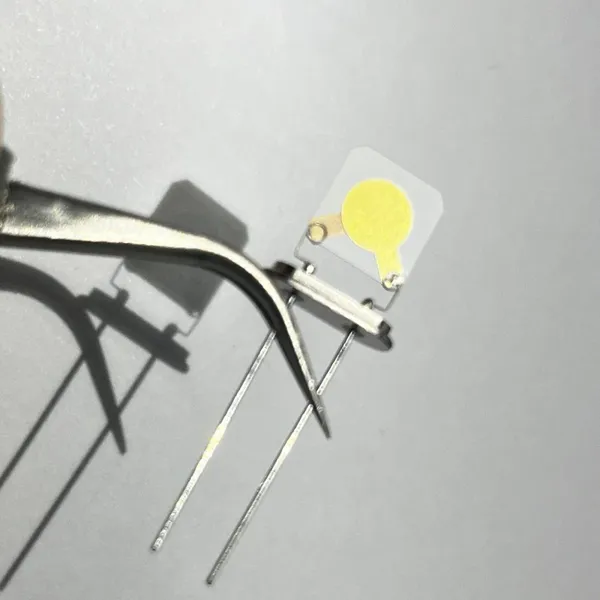 Read More
 -
QCM sensor crystals used in Protein Interactions
January 6, 2026QCM sensors can be used for the direct, marker-free measurement of specific interactions between immobilized molecules and analyte Read More

Contact Us
Recommended Products
-
 Gold 7.995MHz Qcm Sensor CrystalNegotiableMOQ: 10 Blades
 -
Quartz Qcm Sensor Crystal 6MHz for Metrohm Autolab and Other EqcmUS$ 28 - 40MOQ: 10 Blades
-
QCM Sensor Crystal, Gold 9MHz/10MHz QCM922/934 EQCMNegotiableMOQ: 10 Blades
-
EQCM Gold 9MHz/10MHz QCM922/934NegotiableMOQ: 10 Blades
-
QCM Sensor Crystal, Gold 7.995MHz for CHI EQCMNegotiableMOQ: 10 Blades
-
QCM Gold 10MHz for CHI EQCMNegotiableMOQ: 10 Blades
-
Gold 8MHz /10MHz Qcm Sensor CrystalNegotiableMOQ: 10 Blades
-
QCM Crystal Sensor-QCM200-5MHzNegotiableMOQ: 5 Blades
-
Replacement for DuPont Kalrez® O‑ringsNegotiableMOQ: 10 Packs
-
QCM Sensor Crystal, Gold 5MHz for Biolin Q-sense QCM-D and EQCM-DNegotiableMOQ: 10 Blades
-
QCM Sensor, Gold/SiO2/Platinum and Tens of Other 5MHz for Biolin Q-sense QCM-D EQCM-D and Other EQCMNegotiableMOQ: 10 Blades
-
Quartz Crystal Microbalance QCM Sensor 5MHz 1 Inch, QCM200/QCM300 EQCMNegotiableMOQ: 10 Blades
-
QCM Sensor Crystal, QSX301, QSX338, QSX303, 5MHz Gold QCMNegotiableMOQ: 10 Blades
-
Quartz Crystal Microbalance-QCM200-5MHzNegotiableMOQ: 5 Blades
-
QCM Sensor Crystal, Gold 6MHz for Metrohm Autolab EQCMNegotiableMOQ: 10 Blades